
Insurance guide
How to File a Roof Insurance Claim in New York After Storm or Hail Damage
From the initial phone call to the final invoice, we will not leave you waiting or with unanswered questions.
- 01Document the damage
- 02Review your policy
- 03Get a professional inspection
- 04File promptly
How do I file a roof insurance claim in New York after storm or hail damage?
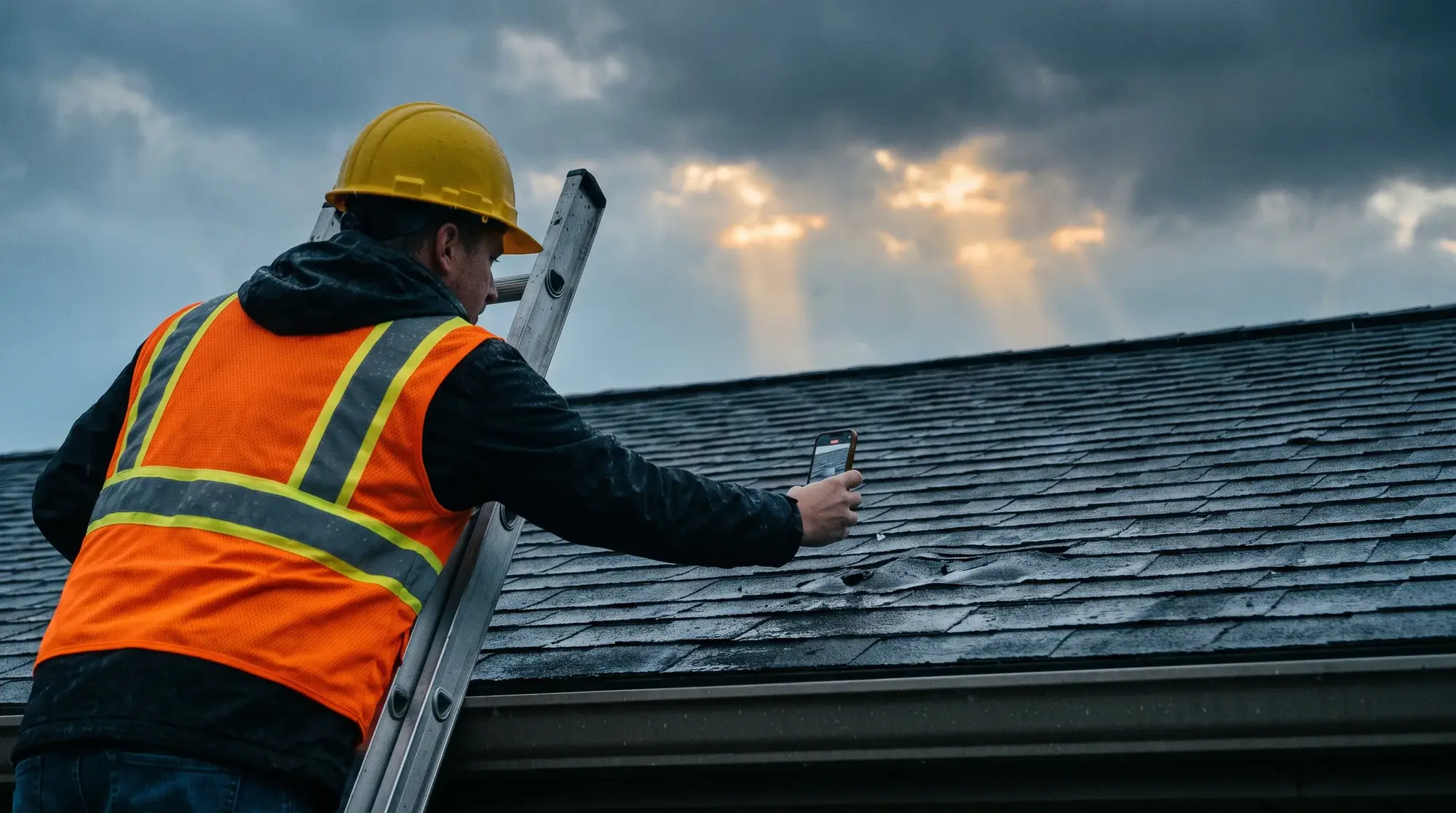
To file a roof insurance claim in New York after storm or hail damage, document the damage with photos, review your policy, get a professional roof inspection, and notify your carrier promptly. The New York Department of Financial Services directs insurers to accept homeowner photo and video documentation, so record everything before any cleanup begins.
Five strides from first photo to signed proof of loss
Wind and hail are the single most common cause of homeowners insurance claims in the United States. According to the Insurance Information Institute, wind and hail accounted for 42.5% of all homeowners insurance losses in 2023, and between 2019 and 2023 they struck about 2.8% of insured homes every year, roughly one in 36 homes, the highest claim frequency of any peril. For a Buffalo homeowner that exposure is amplified by lake-effect winters and high wind off Lake Erie. Filing a roof insurance claim in New York after storm or hail damage comes down to six moves: document the damage, review your policy, get a professional inspection, file promptly, meet the adjuster, and choose your own contractor. Mann Roofing and Remodeling, a Buffalo roofing company founded in 2007, works directly with your insurance carrier through each of those steps, producing the photo evidence and repair scope an adjuster needs to approve the loss. This guide walks through the process the way a New York claim actually unfolds.
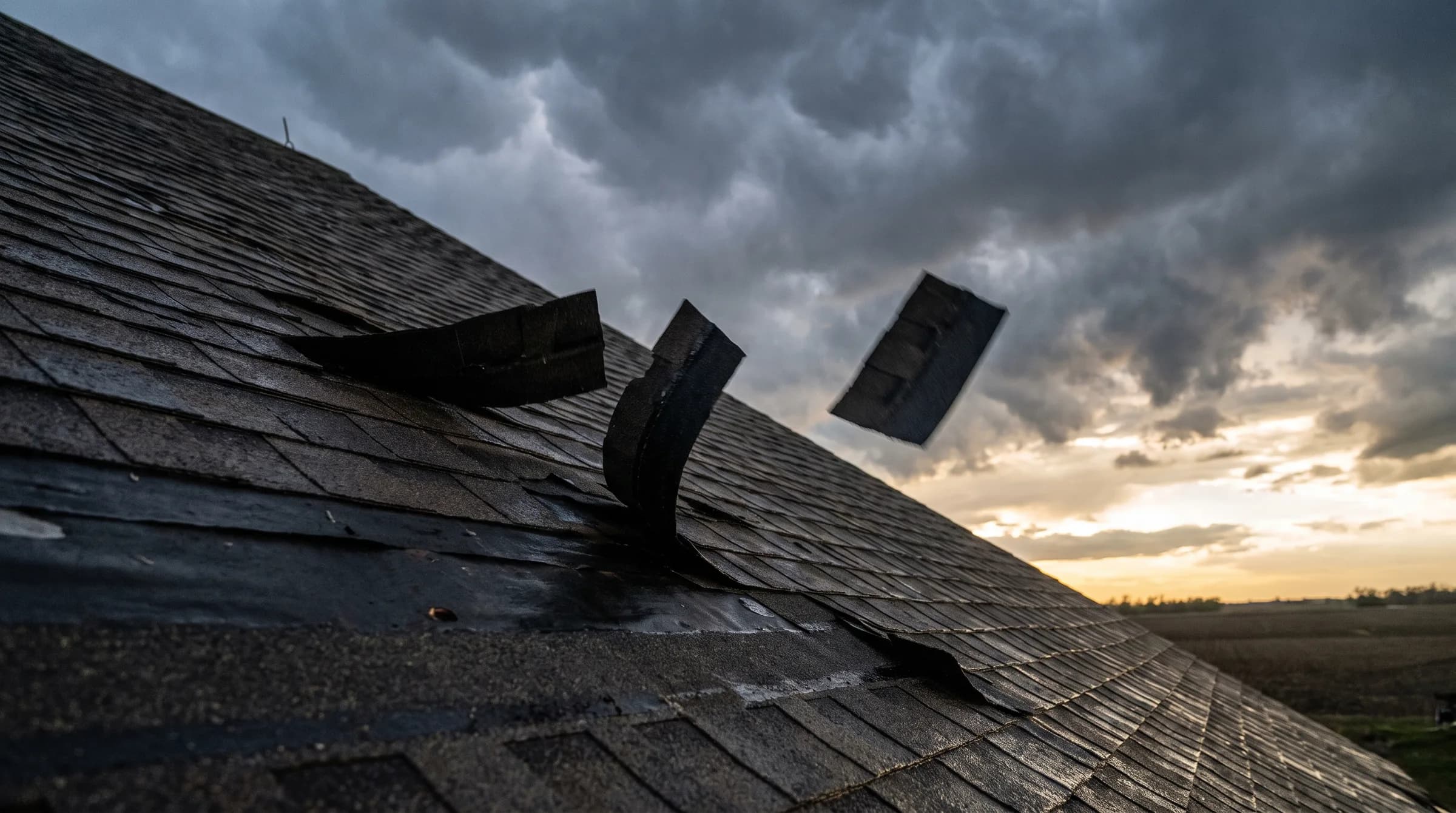
Buffalo's climate makes roofs unusually claim-prone. The National Weather Service reports the city averages roughly 85 to 95 inches of snow per year, and the snowbelt immediately south of the city runs far heavier. During the November 2022 lake-effect event the NWS measured 82 inches in Orchard Park while the Buffalo airport recorded 36 inches, a reminder that damage can be severe just a few miles apart. Repeated freeze-thaw cycles, ice damming at the eaves, and gusting wind lift shingles, crack flashing, and force water beneath the roof deck, where it rots sheathing long before a homeowner sees a ceiling stain. Architectural asphalt shingles are rated to last about 22 to 25 years under NAHB and NRCA estimates, and three-tab shingles about 20, but a single severe hailstorm or wind event can end that lifespan overnight and turn normal wear into a sudden, covered loss. Knowing the difference between age-related deterioration and storm damage is exactly what determines whether a claim is paid.
Shoot it before you move it.
Document the damage
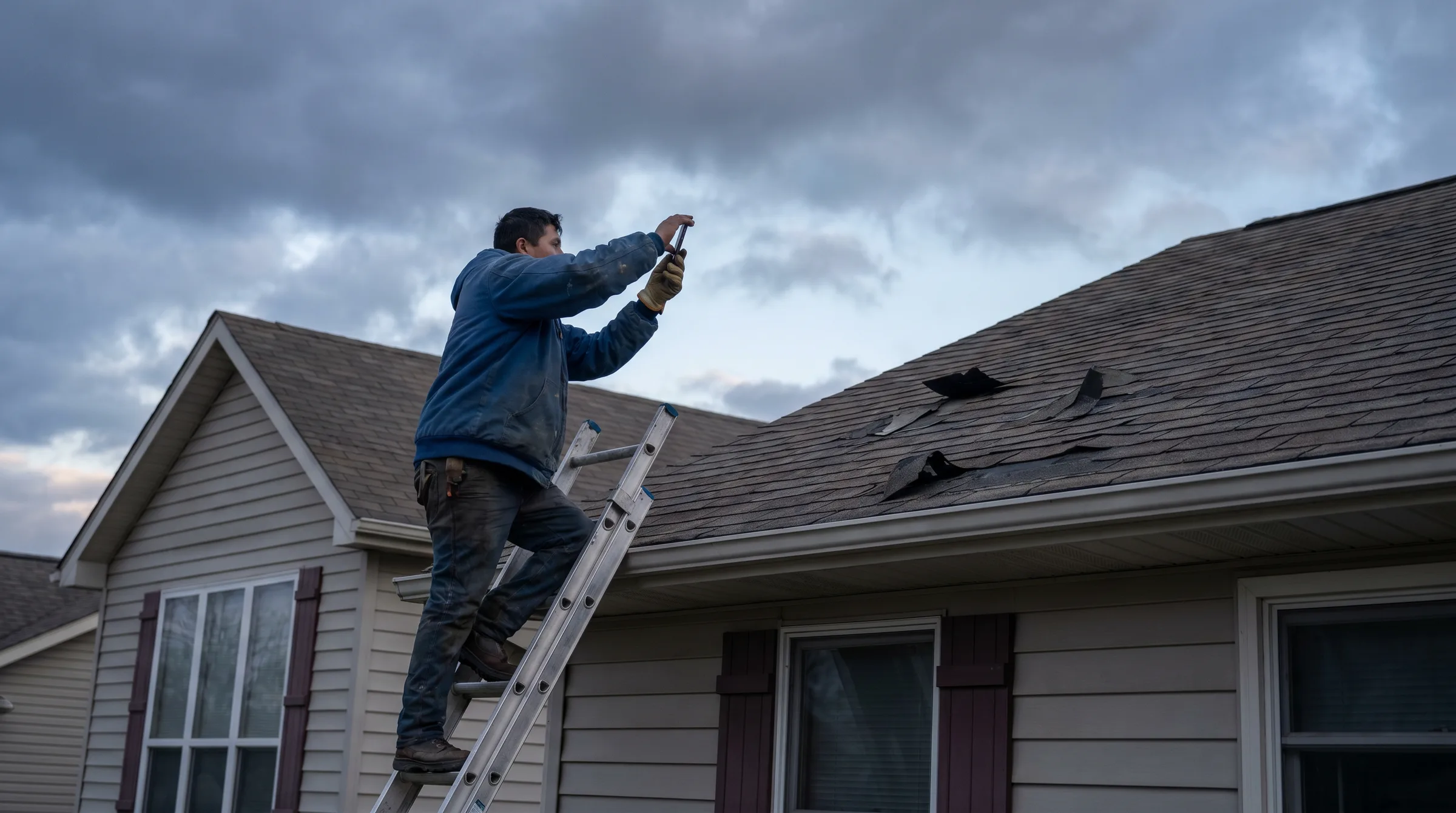
The first step is documentation, and in New York it carries unusual weight. After major storms the state's Department of Financial Services has directed insurers to accept homeowners' own photos and video of losses so residents can safely discard debris before the next storm arrives, meaning your personal record can stand in for an inspector's. Photograph every roof slope from the ground, then close-ups of lifted, torn, or bruised shingles, dented gutters, downspouts, vents, and metal flashing, plus any interior water stains and fallen tree limbs. Capture the date on each image and keep a written log of when the storm hit. The DFS storm guidance is explicit that keeping photos may help claims get processed faster. Do not throw anything away or start permanent repairs before this record exists. If a shingle bundle, a bent gutter, or a punctured vent is the proof of your loss, a photo taken before cleanup is often the only version an adjuster will ever accept once the debris is gone.
The tarp goes up, the repair waits.
Review your policy
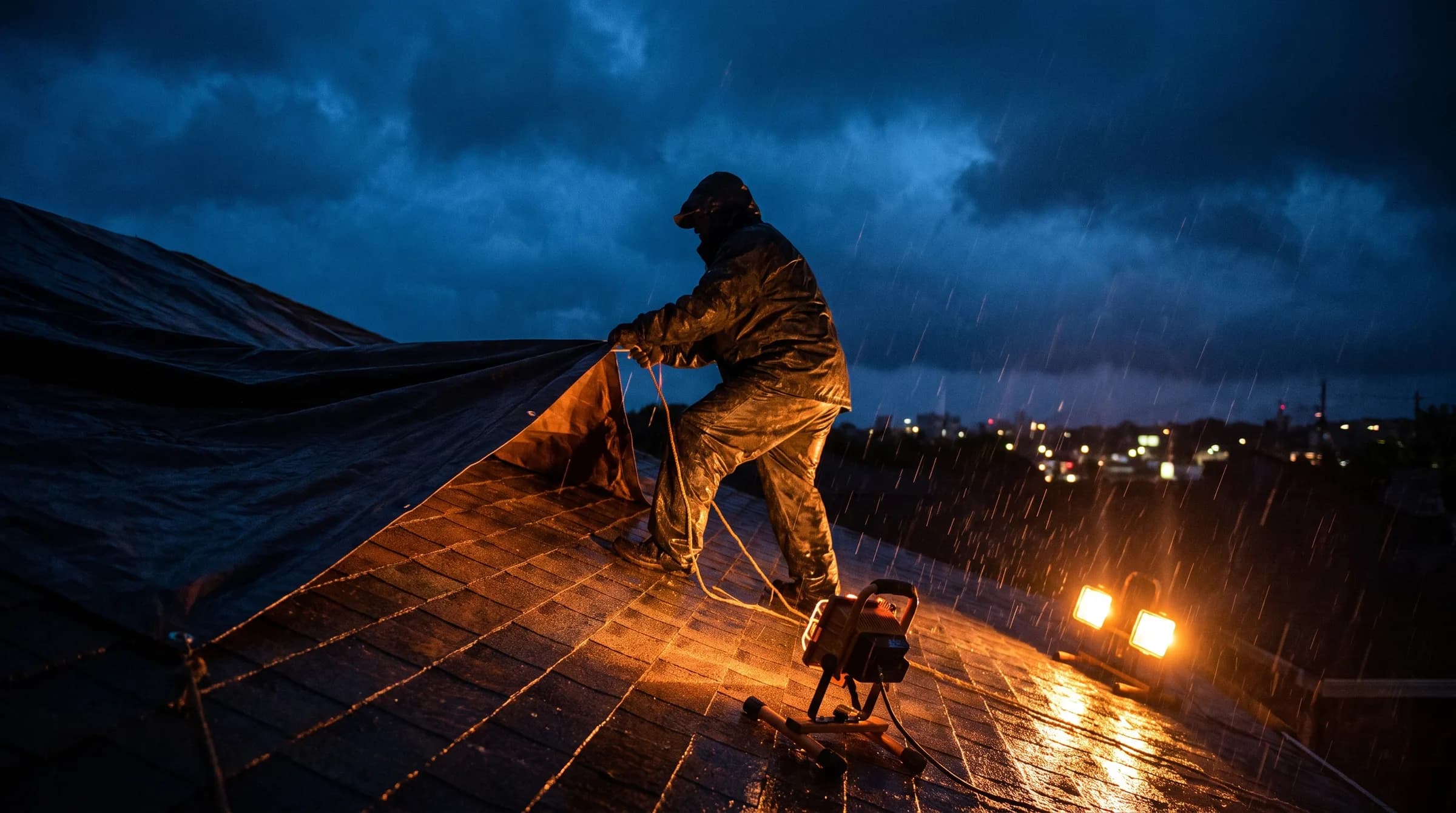
Before you call the carrier, read the policy. Confirm whether it settles on a replacement cost basis or actual cash value, which subtracts depreciation and can leave a large gap on an older roof. Locate your wind and hail deductible, which in many New York lake-effect and coastal policies is a percentage of the dwelling limit rather than a flat dollar amount, and note any cosmetic-damage exclusions. Then protect the home from further loss with temporary measures only, such as tarping an exposed section or clearing a blocked drain. The cost of that temporary protection is generally reimbursable, so keep every receipt. Permanent work must wait. As the New York State Department of Financial Services states plainly, no permanent repairs should be made until your company or its representative has inspected the property. Starting a full replacement before the adjuster sees the roof can forfeit reimbursement and give the carrier grounds to dispute the scope, so the tarp goes up, the receipts go in a folder, and the real repair waits for approval.
“No permanent repairs should be made until your company or its representative has inspected the property.”
New York State Department of Financial Services Evidence beats hope.
Get a professional inspection
Get a professional roof inspection before you file, not after. A qualified local contractor can distinguish genuine storm and hail damage from ordinary aging, and that distinction decides claims. Water damage and freezing, the second most frequent peril, affected about 1.5% of insured homes each year from 2019 to 2023 per the Insurance Information Institute, and carriers scrutinize whether a leak came from a storm or from years of neglect. A thorough inspection covers the shingles, the flashing and valleys, the attic for daylight and moisture, and the ventilation, since the NRCA reports that proper attic ventilation extends roof life by up to 25% and its absence can be read as maintenance failure rather than storm loss. Mann Roofing and Remodeling is certified by CertainTeed and Owens Corning and inspects all of it, then hands you an itemized scope and dated photo set built to match how adjusters estimate. Walking into a claim with an independent, manufacturer-certified assessment is the difference between negotiating from evidence and negotiating from hope.
Phone first, then paper.
File promptly
File promptly and in the right order. The Department of Financial Services advises homeowners to notify the insurer or agent first by phone, then follow up in writing and retain copies of all correspondence. Prompt notice matters legally in New York: under the standard fire policy language embedded in most homeowners contracts, any lawsuit against the insurer must be commenced within twenty-four months of the loss, a two-year contractual limitation New York's Court of Appeals reaffirmed as enforceable in 2024. Waiting also works against you practically, because a regional hailstorm or windstorm can bury carriers in claims within days, and the earliest, best-documented files tend to be inspected and settled first. When you report, give the carrier your dated photos, the storm date, and your contractor's preliminary scope. A claim number, an assigned adjuster, and a written acknowledgment are what you want in hand before the week is out, and every piece of that paper trail becomes leverage if the settlement later comes in low.
The roof gets its own advocate.
Meet the adjuster, with your own contractor
When the insurance adjuster arrives to inspect, have your contractor there too. The adjuster works for the carrier and estimates the loss on its behalf; your contractor represents the roof and your interest in a complete, code-compliant repair. Meeting on the roof together lets both parties agree on the damaged area, the number of squares, and line items like drip edge, ice-and-water shield, and ventilation in a single visit, which cuts the supplement back-and-forth that stretches many claims for weeks. New York homeowners also have the right to choose their own contractor, not one steered to them by a carrier's preferred-vendor program. The DFS repeatedly cautions residents to be wary of unsolicited, out-of-town repair offers that surge in after every hailstorm and disappear before a warranty is ever tested. A locally rooted company that will still be in Buffalo years later is the safer signature. Mann Roofing and Remodeling, based in Buffalo since 2007, attends the adjuster meeting, works with your carrier through the file, and stands behind the finished roof.
- Actual cash value (ACV)
- A settlement method that pays the roof's replacement cost minus depreciation for age and wear, which can leave a significant gap on an older roof.
- Replacement cost value (RCV)
- A settlement method that pays to replace the roof with new materials of like kind and quality without deducting depreciation, subject to your deductible.
- Wind and hail deductible
- A separate deductible for wind or hail losses, often set as a percentage of the dwelling coverage limit rather than a flat dollar amount.
- Supplement
- A request to the insurer for additional payment when the approved scope misses damage or code items the contractor uncovers during the actual repair.
Do you have a claim?
Four situations, four next strides. Pick the one that matches your roof.
An organized file settles faster, and closer to the true cost
The claim file, at a glance
- Most common claim by frequency
- Wind and hail, 2.8% of insured homes per year, 2019 to 2023 (Insurance Information Institute)
- Wind and hail share of losses
- 42.5% of homeowners losses in 2023 (Insurance Information Institute)
- Buffalo average snowfall
- About 85 to 95 inches per year (National Weather Service)
- NY deadline to sue an insurer
- Within 24 months of the loss (standard fire policy language)
- NY DFS consumer help line
- (800) 342-3736
- Mann Roofing certifications
- CertainTeed and Owens Corning certified
- Financing for coverage gaps
- HEARTH, 0% interest for 12 months, no payments
- Mann Roofing and Remodeling
- Buffalo, NY, founded 2007, (716) 500-6266
Two things protect you at the finish. First, financing for any gap the policy does not cover, whether a deductible, a code upgrade, or a betterment the carrier depreciates. Mann Roofing and Remodeling offers HEARTH financing at 0% interest for 12 months with no payments, so an approved claim is not held up waiting on out-of-pocket cash. Second, recourse if the carrier denies or underpays a legitimate loss. The New York State Department of Financial Services regulates every insurer operating in the state and runs a consumer help line at (800) 342-3736, where homeowners can ask questions, request a review, or file a complaint against an insurer. Keep your photos, inspection report, receipts, and correspondence organized from day one, because an organized file settles faster and closer to the true replacement cost of the roof. To start a storm or hail damage inspection in the Buffalo area, call Mann Roofing and Remodeling at (716) 500-6266, and bring your claim number and your photos to the first appointment.
Sources in this file
- Insurance Information Institute, Facts + Statistics: Homeowners and renters insurance
- NY Dept of Financial Services, Managing and Mitigating Losses
- NY Dept of Financial Services, Storm Preparedness
- National Weather Service Buffalo, Buffalo snowfall records
- National Roofing Contractors Association (NRCA)
- National Law Review, New York enforces 2-year insurance suit limitation

Claim questions, answered straight
Does homeowners insurance cover roof storm damage in New York?
Yes. Standard New York homeowners policies cover sudden roof damage from covered perils like wind and hail, which the Insurance Information Institute reports as the most frequent claim type, striking about 2.8% of insured homes yearly. Gradual wear, neglect, and lack of maintenance are generally excluded.
How long do I have to file a roof claim in New York?
Notify your carrier as soon as possible after the storm. While notice deadlines vary by policy, most New York homeowners contracts, under standard fire policy language, require any lawsuit against the insurer to be filed within 24 months of the loss, so do not delay reporting.
Should I get a roof inspection before or after filing a claim?
Get a professional inspection before filing. A certified contractor documents whether the damage is storm-related or age-related, distinguishing it from water and freezing damage, which the Insurance Information Institute notes affects about 1.5% of homes yearly. That evidence strengthens your claim before the adjuster arrives.
Can I choose my own roofing contractor for an insurance claim?
Yes. New York homeowners choose their own contractor and are not required to use a carrier's preferred vendor. The Department of Financial Services cautions against unsolicited storm-chaser offers. A locally based company like Mann Roofing and Remodeling can attend the adjuster meeting and work with your carrier.
What if my roof insurance claim is denied?
You can dispute it. The New York State Department of Financial Services regulates insurers and operates a consumer help line at (800) 342-3736 for questions and complaints. Keep your photos, inspection report, and correspondence organized to support a request for review or reinspection.
Storm damage? Start the file today.
One call starts the photo record, the inspection scope, and the carrier file, free, from a CertainTeed and Owens Corning certified Buffalo roofer.