
Roof Replacement Guide
Signs You Need a New Roof in Buffalo, NY
A roof writes its symptoms down long before it leaks: curling edges, granules in the gutters, daylight in the attic. This guide reads the chart entry by entry and tells you when the answer is repair, replacement, or a closer look. Done right the first time, not the third.
- Curling or cracked shingles
- The field is spent
- Granules in the gutters
- Protection is failing
- Daylight in the attic
- Water can get in
- Sagging ridge or soft decking
- Look at it promptly
- Age past 20 years
- Time for an inspection
Read the roof from the street, then from inside the attic
The clearest signs you need a new roof are age past the material's rated lifespan, widespread curling or bald shingles, granules collecting in the gutters, and daylight or water stains in the attic. Most architectural asphalt shingle roofs last about 22 to 25 years (NRCA), so age is the first thing to check.
Age past two decades
Age is the first and most reliable sign. Most architectural asphalt shingle roofs in the Buffalo area last about 22 to 25 years, three-tab shingles closer to 20, and premium or luxury shingles 30 years or more, according to the National Roofing Contractors Association. If you know your roof was installed more than two decades ago, or the previous owner could not tell you its age, it is worth a professional inspection even if it still looks fine from the street. Shingles fail from the mat up long before the damage is obvious from the ground, and a roof at the end of its rated life rarely gives much warning before the first leak.
Curling, cupping, and cracked shingles
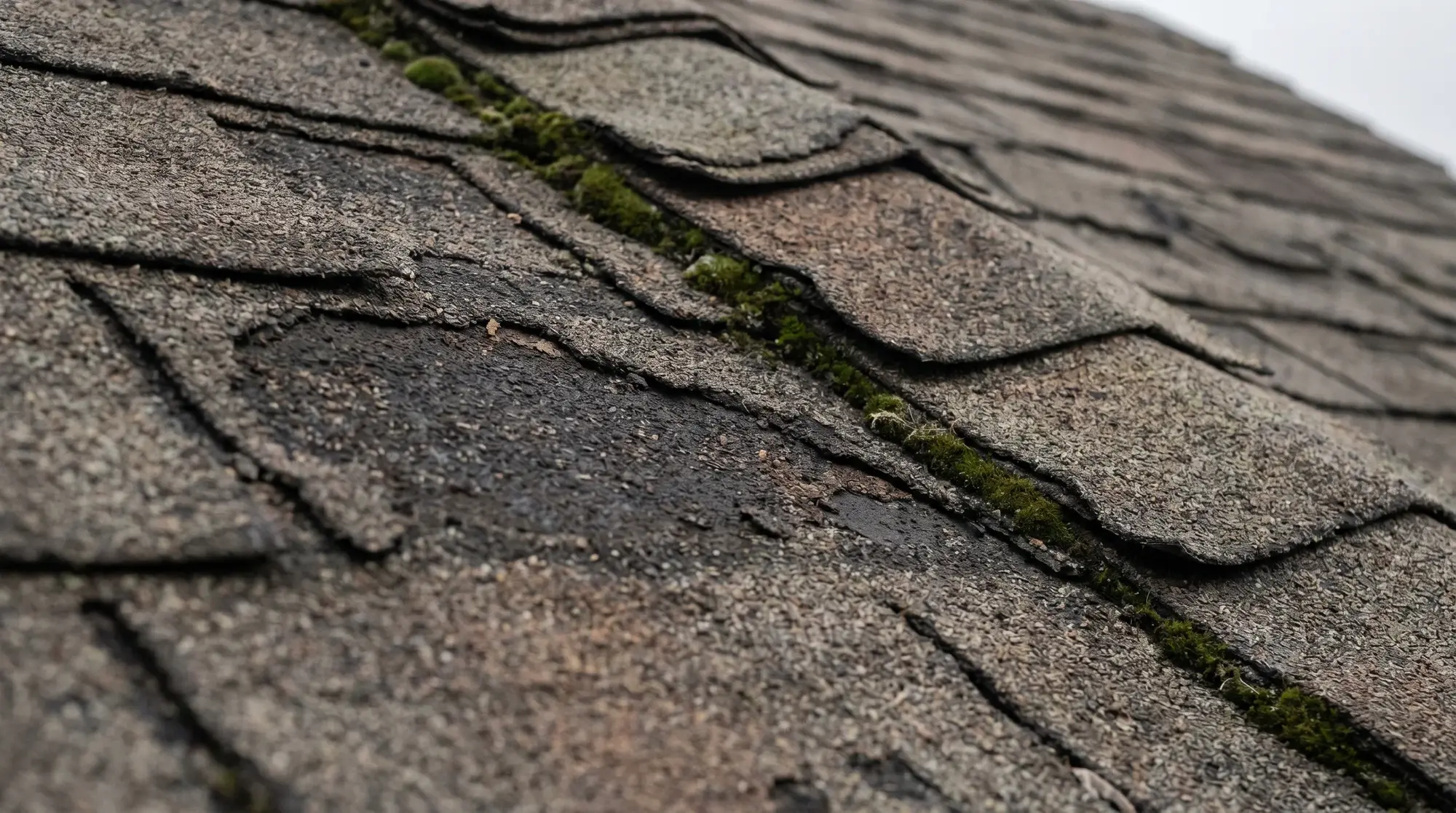
Curling, cupping, and clawing shingles are among the most visible warnings. As the asphalt binder dries out and loses flexibility, shingle edges lift and curl upward or the centers rise while the corners stay down. Cracked, brittle, or missing shingles point to the same underlying problem. Once shingles reach this stage they no longer lie flat and seal against wind-driven rain and snow, so water can work its way underneath them. A few damaged shingles after a single storm may be a simple repair, but widespread curling and cracking across the whole slope usually means the field of the roof is spent.
Granules in the gutters
Granules collecting in your gutters and at the base of the downspouts are a classic sign of an aging asphalt roof. Granule loss is the wearing away of the crushed mineral particles bonded to the shingle surface, which exposes the asphalt underneath to direct sun, rain, and heat. Those granules are not cosmetic. They shield the asphalt from ultraviolet light, and once they are gone the exposed asphalt dries, cracks, and ages far faster. A brand new roof always sheds a little loose granule, but heavy piles in the gutters, or bald, shiny black patches visible on the shingles, mean the protective layer is failing. The National Roofing Contractors Association lists granule loss among the earliest indicators of asphalt shingle failure.
Reference ranges
- Architectural asphalt shingle lifespan
- About 22 to 25 years (NRCA)
- Three-tab asphalt shingle lifespan
- About 20 years (NRCA)
- Buffalo average snowfall
- About 85 to 95 inches per year (NWS Buffalo)
- Attic ventilation impact
- Can extend roof life up to 25% (NRCA)
- Certifications
- CertainTeed and Owens Corning certified
- Financing
- HEARTH: 0% interest, 12 months, no payments
- Serving Buffalo since
- 2007
- Phone
- (716) 500-6266
Daylight and stains in the attic
Some of the most important signs are found inside, not outside. Go into the attic on a bright day with the lights off and look up. According to InterNACHI's roof inspection guidance, if you can see daylight through the roof boards, water can find its way in through the same gaps. Dark water stains on the underside of the roof decking or on the rafters, damp or matted insulation, a musty smell, or visible mold all point to a roof that is already letting moisture in. Stains that spread after each storm, or that reach your ceilings and walls, mean the problem is active and getting worse rather than historic.
The Buffalo factor
Buffalo weather is hard on roofs, which is why local age limits tend to run to the lower end of the national range. The National Weather Service reports that Buffalo averages roughly 85 to 95 inches of snow a year, and the southern snowbelt towns can see far more. Repeated freeze and thaw, heavy snow load, and ice dams that back water up under the shingles all shorten a roof's usable life. Ventilation matters just as much as the shingles themselves. The National Roofing Contractors Association notes that proper attic ventilation can extend a roof's life by up to 25 percent, while local climate can change lifespan by as much as 40 percent, so two identical roofs across town can wear out years apart.
Sagging lines, flashing, and moss
A few other signs deserve attention. A sagging roofline, a dip or wave along the ridge, or soft, spongy decking underfoot are structural warnings that can point to trapped moisture or a weakened deck, and they should be looked at promptly. Cracked, rusted, or missing flashing around chimneys, skylights, and valleys is a common leak source even when the shingles themselves still look fine. Moss or dark streaks that hold moisture against the surface, a sudden climb in heating bills from lost attic efficiency, or shingle debris in the yard after every windstorm are all worth a second look.
The reading
Not every sign means a full replacement. A handful of blown-off shingles, a single flashing leak, or damage confined to one slope can often be repaired. The decision usually comes down to age and how widespread the damage is. When a roof is past 20 years, showing heavy granule loss across the whole field, and leaking in more than one place, patching tends to cost money without buying much time. A roof still in the middle of its life with an isolated problem is usually a repair. An honest inspection, ideally with attic photos and a look at the decking, is the only way to know which situation you are in.
Chart sources
Chart glossary
- Granule loss
- The wearing away of the crushed mineral granules bonded to the surface of an asphalt shingle. The granules shield the asphalt from ultraviolet light, so once they are gone the exposed asphalt dries out, cracks, and ages much faster.
- Curling shingles
- Shingles whose edges lift and turn up, or whose centers rise, as the asphalt binder dries and loses flexibility. Curled shingles no longer seal flat, which lets wind-driven rain and snow reach the roof deck.
- Ice dam
- A ridge of ice that forms at the roof's edge when heat escaping into the attic melts snow that refreezes at the colder eaves. The trapped meltwater can back up under the shingles and leak into the home, a frequent problem in the Buffalo snowbelt.
- Attic ventilation
- The balanced intake and exhaust airflow that keeps an attic cool and dry. It reduces heat and moisture buildup and, according to the NRCA, can extend a roof's service life by up to 25 percent.
- Roof decking (sheathing)
- The layer of wood boards or plywood that the shingles are fastened to. Water stains or visible daylight on the decking from inside the attic are strong signs of an active or developing leak.
Repair it, or replace it?
Match your situation to a branch. Every one ends at a real next step.
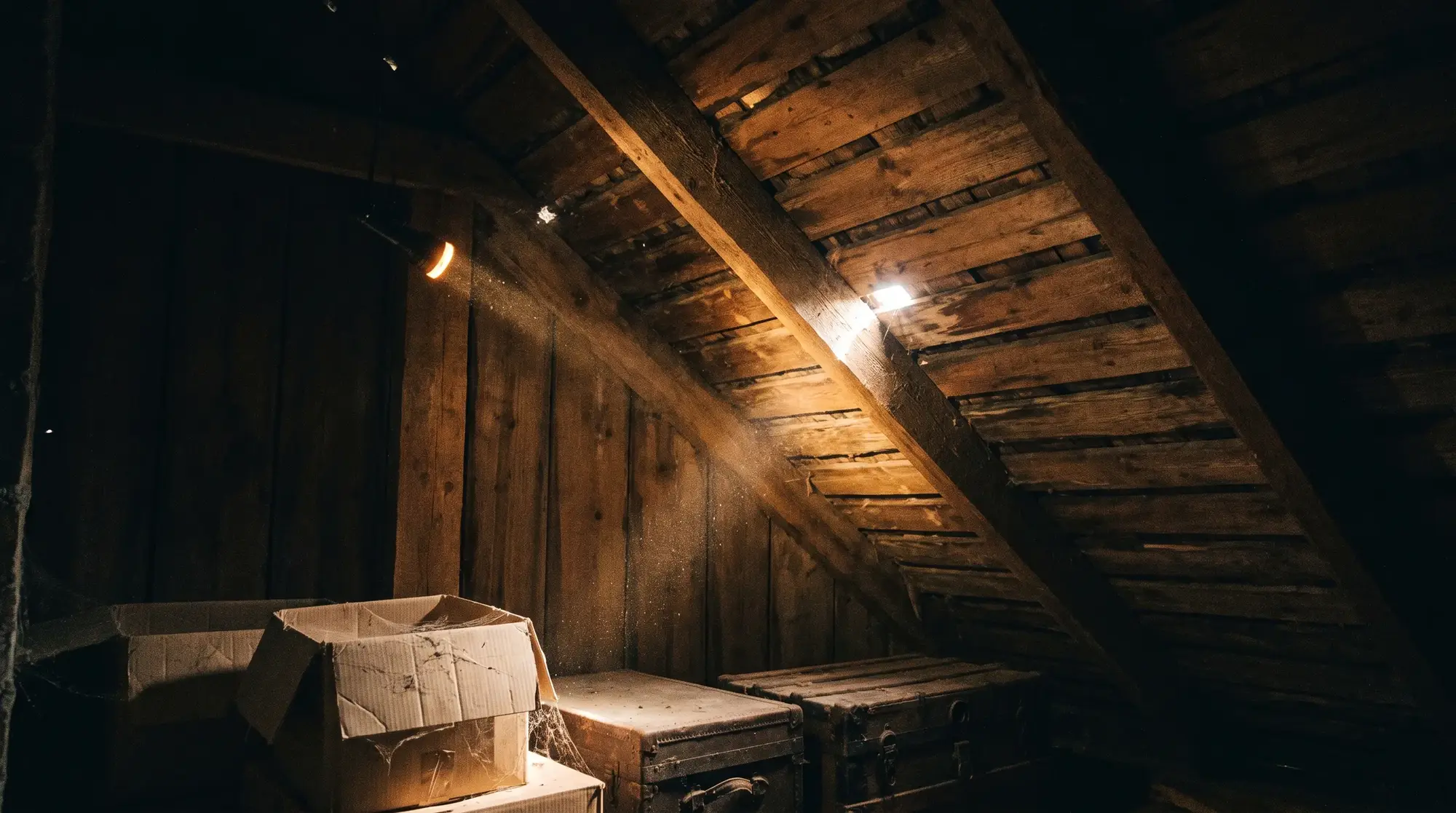
If you can see out, water may be able to find its way in.
The roof keeps its own chart. Read it before it leaks.

New roof questions, answered straight
How long does an asphalt shingle roof last in Buffalo?
Most architectural asphalt shingle roofs last about 22 to 25 years and three-tab shingles closer to 20, according to the NRCA. Buffalo's heavy snow, freeze and thaw cycles, and ice dams tend to push local roofs toward the shorter end, so an inspection after 20 years is wise.
Are granules in my gutters a sign I need a new roof?
Granules in the gutters are a common sign of an aging asphalt roof. A new roof sheds a little loose granule, but heavy piles or bald black patches on the shingles mean the protective mineral layer is failing and the asphalt beneath is exposed to UV damage.
What does daylight in my attic mean?
Per InterNACHI's inspection guidance, if you can see daylight through the roof boards, water can get in through the same gaps. Combined with stained decking, damp insulation, or a musty smell, attic daylight is a strong sign the roof is failing and needs professional evaluation.
Can I repair my roof instead of replacing it?
Sometimes. A few blown-off shingles, one flashing leak, or damage on a single slope can often be repaired. When a roof is past 20 years, losing granules across the whole field, and leaking in multiple spots, replacement is usually the sounder investment than repeated patching.
Does Mann Roofing offer financing for a new roof?
Yes. Mann Roofing and Remodeling offers HEARTH financing with 0% interest for 12 months and no payments during that period, which lets Buffalo homeowners start a roof replacement without paying the full cost up front. Call (716) 500-6266 to schedule an inspection.

Get a straight reading on your roof
Mann Roofing and Remodeling has served Buffalo, NY homeowners since 2007 and installs CertainTeed and Owens Corning certified roofing systems. If you have spotted curling shingles, granules in the gutters, or daylight in the attic, a professional inspection will tell you whether you are looking at a repair or a replacement, and roughly how much roof life you have left. For homeowners who need to spread the cost, Mann offers HEARTH financing with 0% interest for 12 months and no payments during that period. To schedule an inspection, call (716) 500-6266.