
Mann Roofing and Remodeling
Roof Repair in Buffalo, NY: Leaks, Flashing, and Ice Dams
Done right the first time, not the third.

Who repairs roof leaks in Buffalo, NY?
Mann Roofing and Remodeling repairs roof leaks, failed flashing, wind-lifted and missing shingles, and freeze-thaw ice-dam damage across Buffalo, NY. Founded in 2007 and certified by CertainTeed and Owens Corning, the crew traces each leak to its true source, then repairs rather than replaces whenever the deck and surrounding shingles are still sound.
The drip gets traced upstream, like evidence
Mann Roofing and Remodeling has repaired Buffalo roofs since 2007, and most of the calls that come in are not for a full tear-off. They are for a single failing detail: a leak over a bedroom, a strip of shingles the wind peeled back, a chimney that stains the ceiling every thaw. Repair is the quiet majority of what a Western New York roof actually needs, because the region punishes roofs unevenly. The National Weather Service in Buffalo reports the city averages roughly 85 to 95 inches of snow a year, and the snowbelt south of the city sees far more. In November 2022, Buffalo's airport recorded about 36 inches from one storm while Orchard Park was buried under 82. That kind of load rarely destroys a roof outright. It finds the one weak seam and exploits it.
Trace the water to its entry
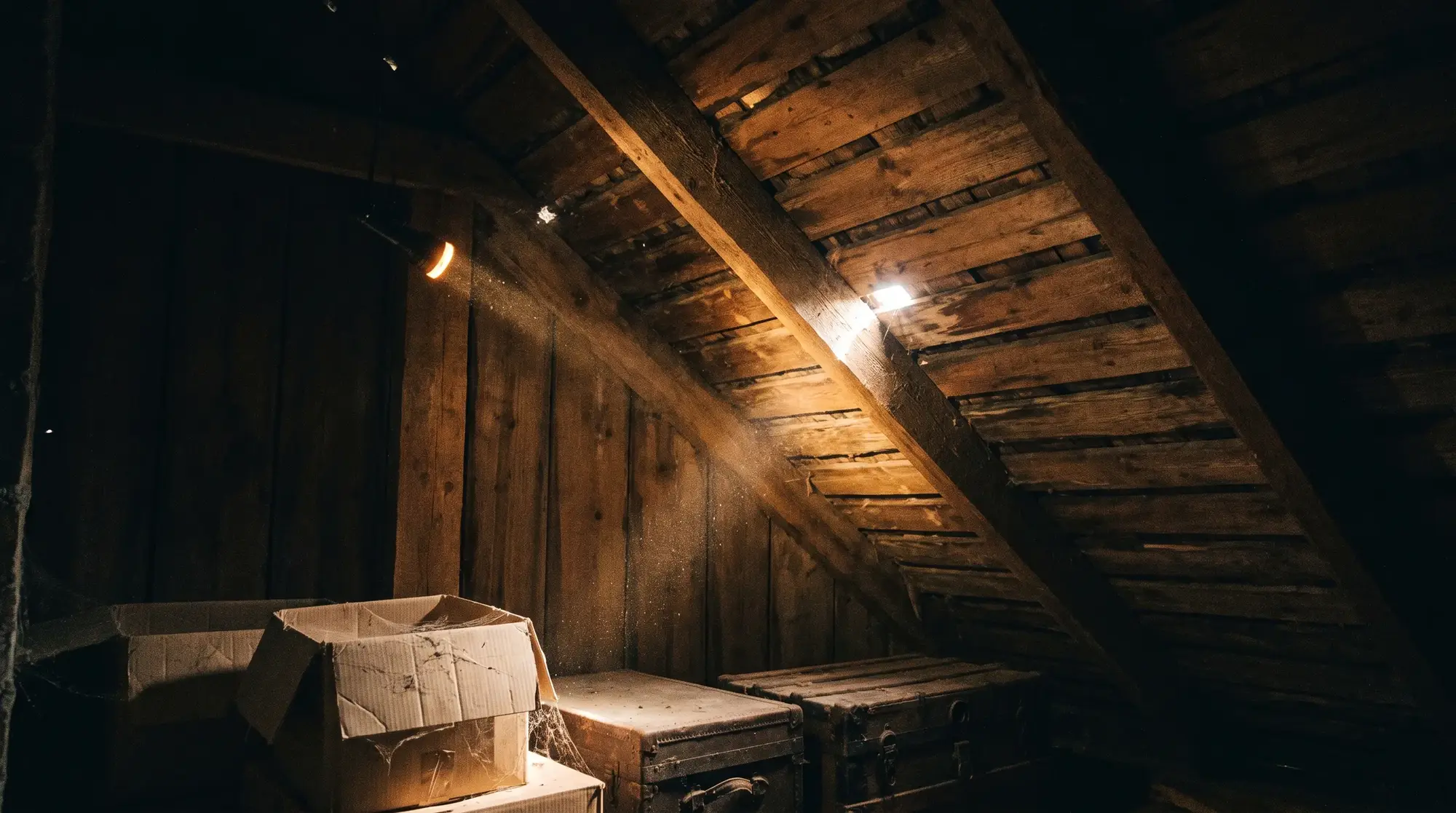
The hardest part of a roof leak is almost never the fix. It is finding where the water actually enters, because water does not fall straight down. It travels along the underside of the deck, down a rafter, across a ceiling joist, and surfaces several feet from the true breach. A stain in the middle of a room can trace back to a nail pop, a cracked pipe boot, or a lifted shingle near the ridge. Mann's crews work backward from the interior stain to the entry point, checking penetrations, valleys, and flashing before assuming the field shingles have failed. Fixing the stain without finding the source just moves the leak.
Check the flashing before the field
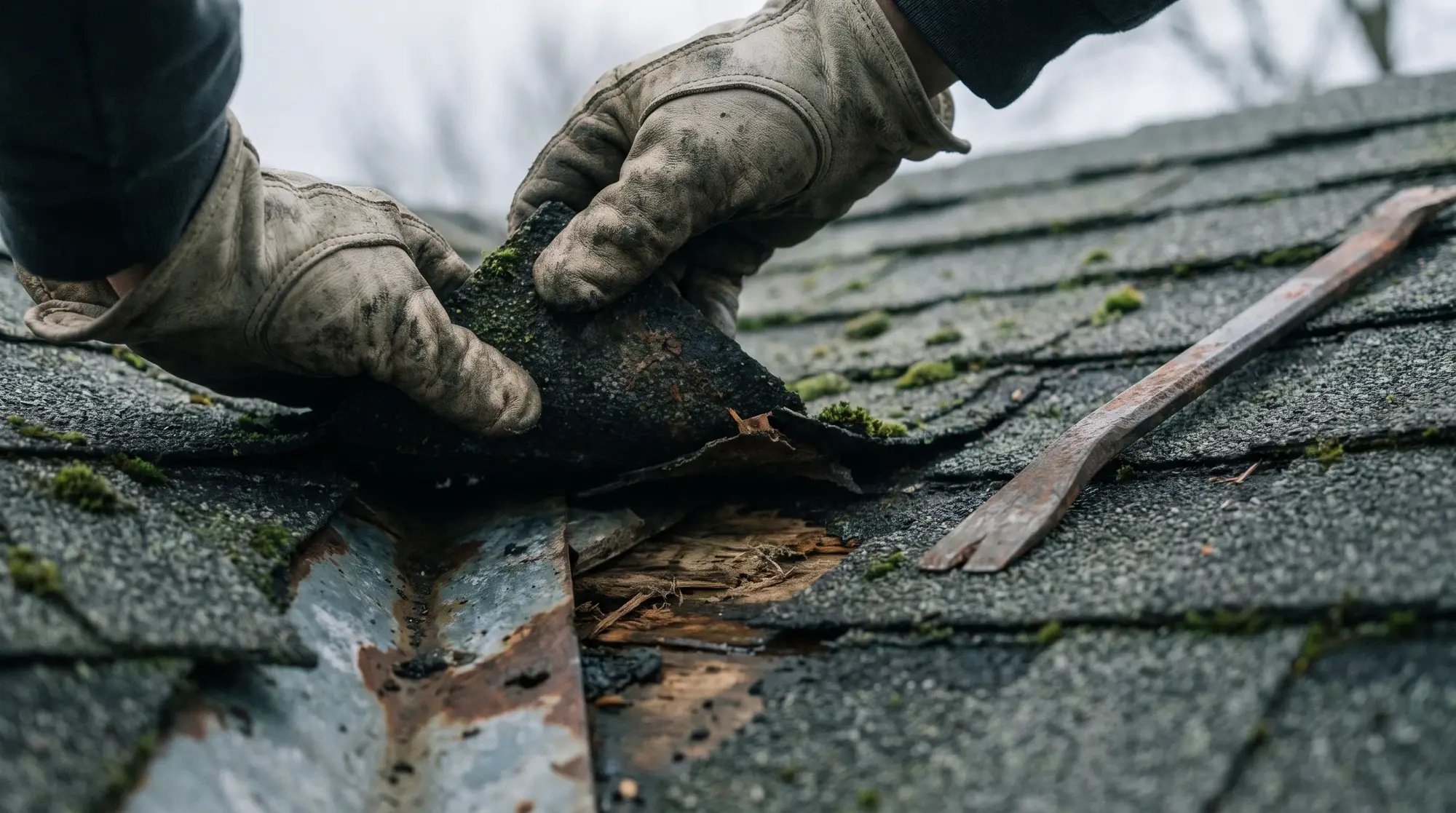
Flashing is the metal that seals the joints a shingle cannot: where the roof meets a chimney, a sidewall, a skylight, a vent pipe, or a valley. It is also where most roofs leak first. Shingles are engineered to shed water for two decades or more, but the thin metal and sealant at these transitions age faster, especially under repeated freeze-thaw. Reflashing a chimney or resealing a pipe boot is a targeted repair that often solves a leak the homeowner assumed meant a whole new roof. When the flashing is the failure and the surrounding shingles are sound, replacing the roof would mean spending thousands to fix a problem worth a fraction of that.
Rebuild the wind-torn slope
Wind damage is the other frequent repair. High winds lift and crease shingles, break the factory seal, and tear tabs off entirely, leaving the underlayment and nails exposed to the next rain. A few missing shingles is a same-week repair when matching material is available and the deck underneath is dry and solid. The judgment call is whether the damage is isolated or whether the seal has broken across an entire slope, which shifts the math toward replacement.
Put the ruling in writing
Whether repair beats replacement comes down to three questions: how old the roof is, how localized the damage is, and whether the deck is still sound. A roof with most of its service life left, damage confined to one area, and a dry, solid deck is a clear repair. Architectural asphalt shingles last roughly 22 to 25 years and standard three-tab about 20, according to figures from the NRCA and NAHB, so a ten-year-old roof with wind damage to one slope is worth saving. Ventilation matters more than most homeowners expect. The NRCA notes proper attic ventilation can extend a roof's service life by up to 25 percent, and that local climate can change a roof's lifespan by as much as 40 percent. A repair that also corrects ventilation buys years, not just a patch.
Repair is not always the honest answer, and Mann will say so. When shingles are curling and shedding granules across every slope, when the same leak returns in a new spot each season, or when the deck has gone soft with rot, patching becomes throwing money at a roof that is already finished. Matching discontinued shingle colors on an older roof is another real limit. A repair that reads as a patch on a roof near the end of its life is rarely worth it. The goal is a straight recommendation, not the bigger invoice.
The repair scope, in writing
- 01Leak detection and water-source tracing
- 02Step, counter, and base flashing repair or replacement
- 03Chimney, skylight, and sidewall reflashing
- 04Pipe boot, vent, and penetration reseals
- 05Wind-lifted and missing shingle replacement
- 06Valley, drip-edge, and ridge repair
- 07Ice-dam and freeze-thaw damage repair
- 08Emergency leak tarping and temporary weatherproofing
- 09Attic ventilation assessment and correction
- 10Written repair-versus-replacement inspection and estimate
It is primarily heat flowing from the house that causes the nonuniform temperatures of the roof surface leading to ice dams.
Buffalo's signature roof problem is the ice dam. Snow melts off the warm upper roof, runs down to the cold eave, and refreezes into a ridge of ice that forces the next meltwater backward, under the shingles, and into the house. The University of Minnesota Extension, whose ice-dam research is widely cited, states the cause plainly: it is primarily heat escaping the house that creates the uneven roof temperatures behind every ice dam. That is why an ice-dam leak often appears on a still, sunny day with no rain in sight. The cost of ignoring it is real. The Insurance Information Institute reports that water damage and freezing made up 22.6 percent of all homeowners insurance claims in 2023, with about one in 67 insured homes filing a water or freezing claim each year. A proper repair here addresses both the symptom, the damaged shingles and rotted decking, and the cause, which is usually air leakage and weak attic ventilation.
Real Mann roofs, on the record


Roof repair questions, answered straight
Can my roof be repaired instead of replaced?
Often, yes. If your roof still has service life left, the damage is confined to one area like a chimney or a single slope, and the deck underneath is dry and solid, a targeted repair is usually the right call. Mann inspects the source first, then gives a straight repair-or-replace recommendation, not the bigger invoice.
Why is my roof leaking when it isn't raining?
Usually an ice dam or condensation. When snow melts off a warm upper roof, refreezes at the cold eave, and backs meltwater under the shingles, leaks appear on dry, sunny days. The University of Minnesota Extension traces the cause to heat escaping the house, so a lasting fix corrects attic ventilation, not just the shingles.
What causes most roof leaks?
Flashing, not the shingles themselves. The metal and sealant where the roof meets chimneys, walls, skylights, vents, and valleys age faster than the shingle field and fail first, especially under Buffalo's freeze-thaw cycles. Reflashing or resealing these joints often stops a leak a homeowner assumed meant a whole new roof.
Can you repair a roof leak in winter?
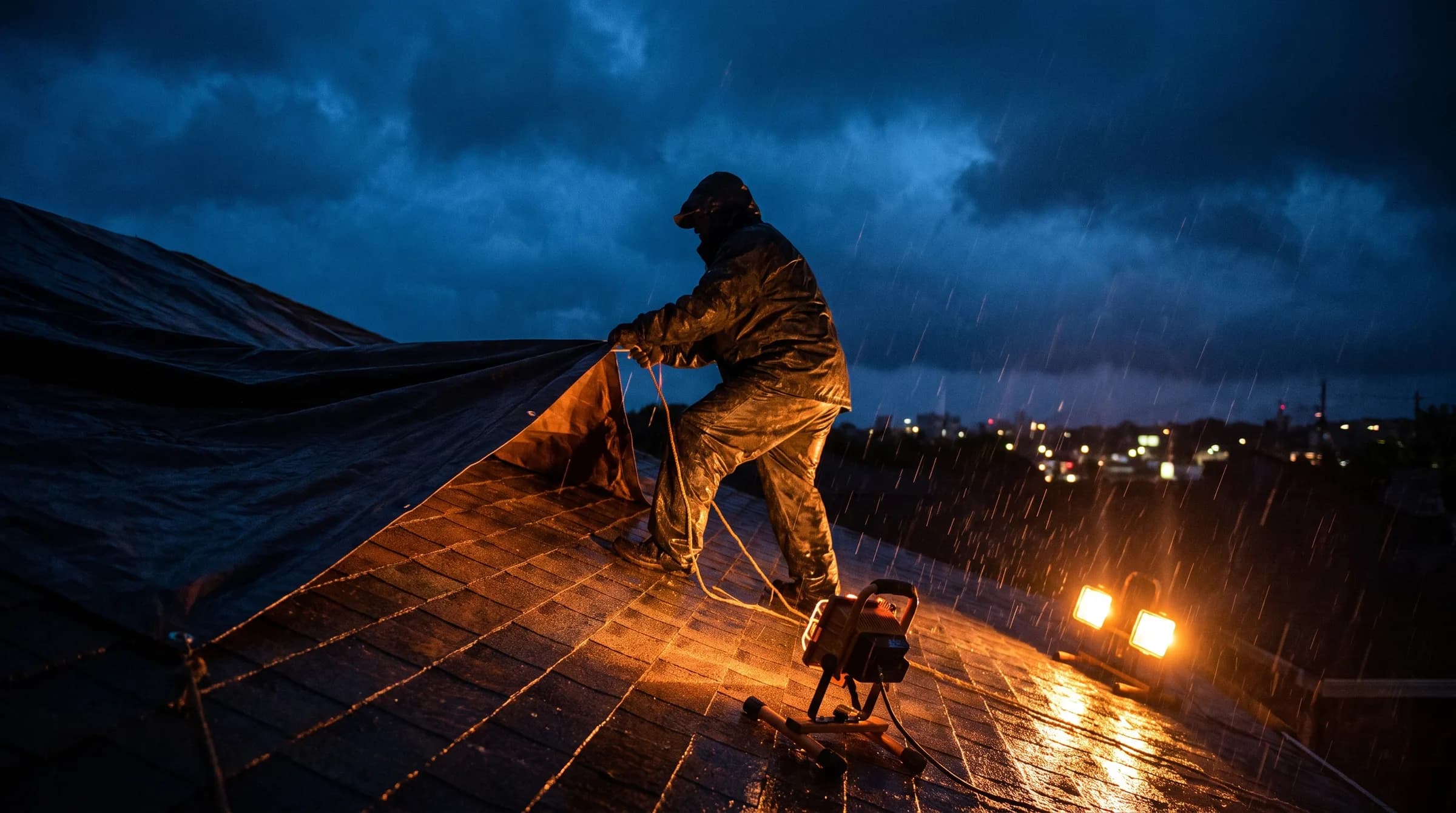
Yes. Active leaks and ice-dam damage cannot wait for spring, so Mann handles emergency tarping and temporary weatherproofing to stop water entry immediately, then completes the permanent repair when conditions allow. Because Buffalo averages 85 to 95 inches of snow a year per the National Weather Service, winter response is a normal part of the job.
Is ice dam damage worth fixing right away?
Yes. Water backing up behind an ice dam rots decking and stains ceilings quickly. The Insurance Information Institute reports water damage and freezing made up 22.6 percent of all homeowners insurance claims in 2023. Repairing early, and correcting the ventilation behind it, costs far less than a season of ignored dams.
Does Mann offer financing for roof repairs?
Yes. For larger repairs, Mann offers HEARTH financing with 0 percent interest for 12 months and no payments, so an urgent leak does not have to wait. Mann Roofing and Remodeling is CertainTeed and Owens Corning certified and has served Buffalo, NY since 2007. Call (716) 500-6266 to schedule an inspection.
Where this case usually leads

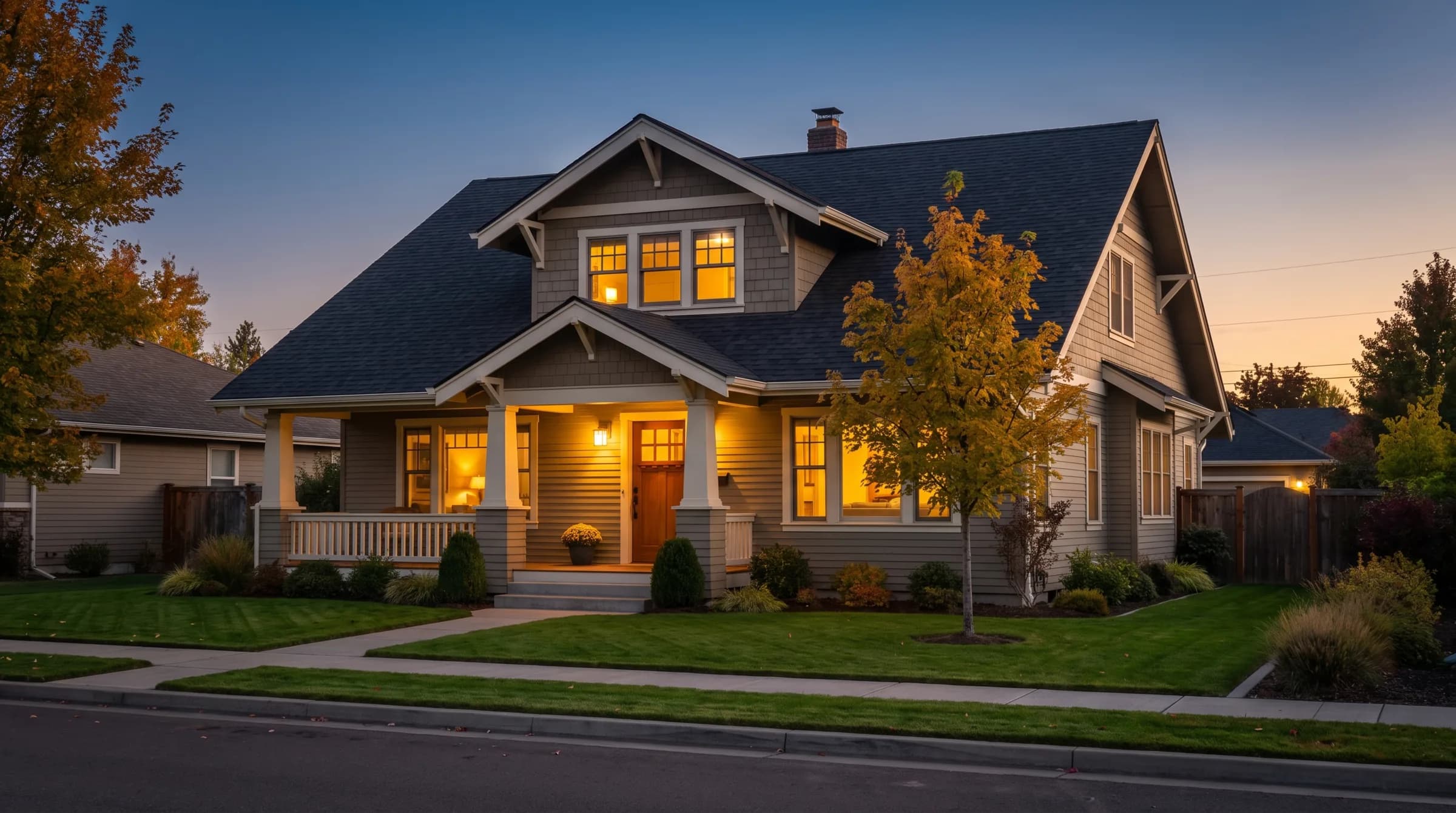
Found once. Fixed once.
Every repair starts with an inspection that finds the source, not just the symptom, and a written explanation of what failed and why. As a CertainTeed and Owens Corning certified contractor, Mann repairs with manufacturer-matched materials so the work integrates with the existing system instead of voiding it. For larger repairs, HEARTH financing offers 0 percent interest for 12 months with no payments, so an urgent leak does not have to wait for the right month. Homeowners across Buffalo can reach the office at (716) 500-6266 for an inspection and a repair-or-replace answer they can trust.