
Buffalo Roofing Cost Guide
What Drives Roof Replacement Cost in Buffalo, NY
Done right the first time, not the third. Five levers move a Buffalo roofing estimate: size, pitch, material, tear-off, and access. This guide walks each fork so you know whether to patch or start over.
- Free written estimates
- CertainTeed and Owens Corning certified
- Financing through HEARTH

What drives the cost of a roof replacement in Buffalo, NY?
A roof replacement in Buffalo, NY typically costs $4 to $11 per square foot installed according to Angi 2026 data, or roughly $9,000 to $18,000 for an average asphalt shingle roof. Five factors move that number most: roof size, pitch, the material you choose, how many old layers must be torn off, and how easily crews can access the roof.
Patch or start over: four forks settle it
Repair the roof you have, or replace it before another Buffalo winter?
Roofers in Buffalo price nearly every job by the square, not by the total square footage of your house. One roofing square equals 100 square feet of roof surface, so a 2,000 square foot roof is 20 squares. For a standard asphalt shingle replacement, installed pricing generally falls between $4 and $11 per square foot according to Angi 2026 data, which puts most single family homes in the $9,000 to $18,000 range nationally, a spread 2026 guides from This Old House and Modernize also report. The spread is wide because five variables move the number more than anything else: size, pitch, material, tear-off, and access.
- Roofing square
- 100 sq ft of roof surface
- Buffalo installed price
- $4 to $11 per sq ft installed (Angi 2026)
- Typical project cost
- $9,000 to $18,000 (asphalt, 2026)
- Tear-off, one layer
- $100 to $150 per square
- Tear-off, two layers
- $150 to $250 per square
- Steep-pitch labor premium
- 25% to 50% at 8/12 or steeper
- NY shingle layer limit
- 2 layers, then full tear-off required
- Buffalo annual snowfall
- ~85 to 95 in (NWS Buffalo)
“Roof replacement shall include the removal of all existing layers of roof coverings down to the roof deck.”
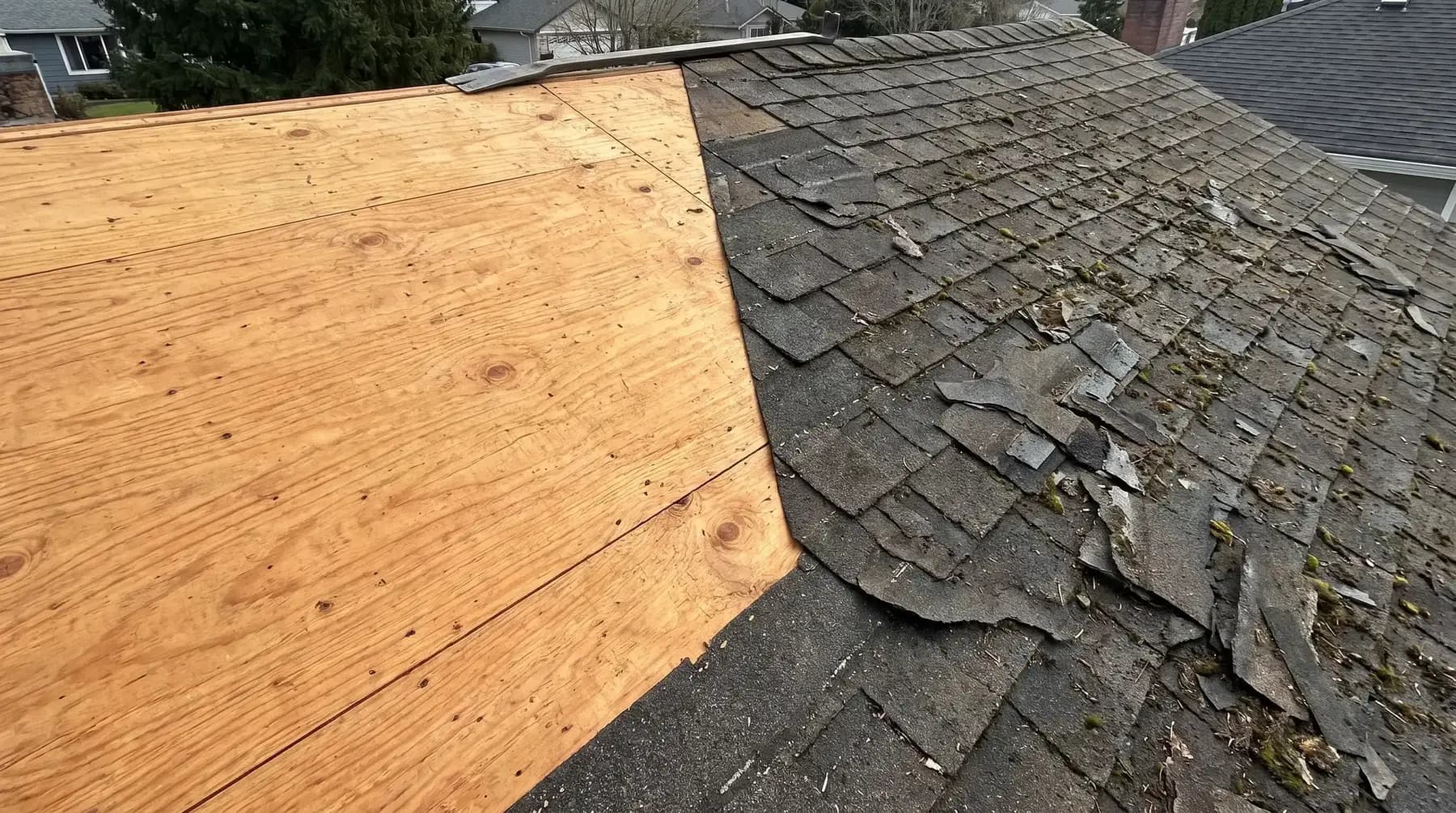
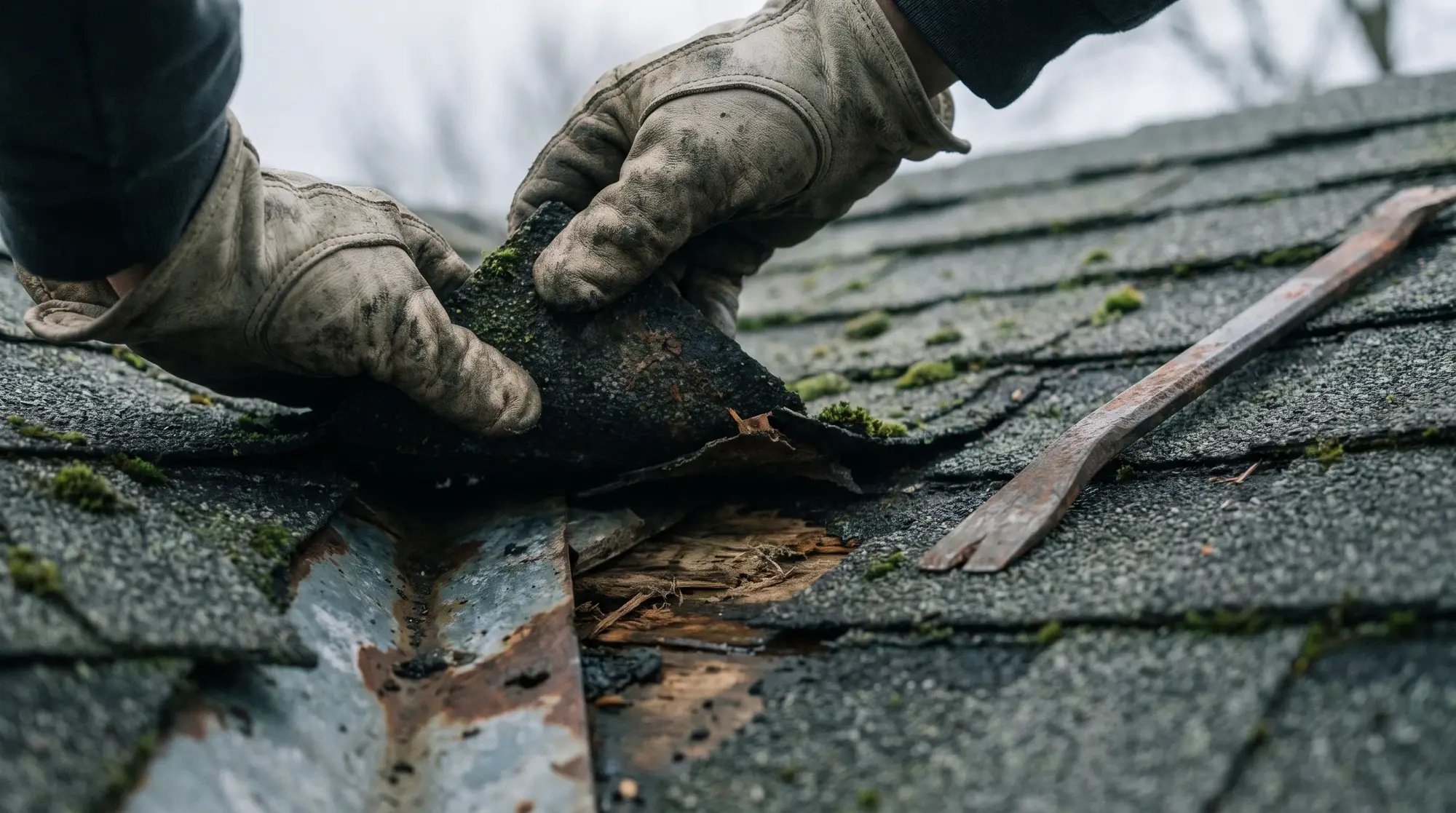
Tear-off is the labor of stripping the old roof down to the wood deck and hauling it away, and it is a real line item, not a rounding error. Removing a single layer of asphalt typically adds $100 to $150 per square, while two layers run $150 to $250 per square because labor time and dump fees roughly double, per HomeGuide. New York caps a roof at two total layers. The Residential Code of New York State requires that once a roof carries two applications, the next replacement must strip everything down to the deck. So a home already on its second layer will always cost more than a comparable home getting its first overlay removed.
- Square
- A roofing square is the industry unit for measuring and pricing a roof. One square equals 100 square feet of roof surface, so a 2,000 square foot roof is 20 squares. Contractors quote materials and labor per square, which is why comparing bids means confirming each one counts the same number of squares.
- Tear-off
- Tear-off is the removal of the existing roof covering down to the wood deck, plus hauling and disposal of the old material. It is priced separately from installing the new roof, usually $100 to $250 per square depending on how many layers must come off, and it lets the crew inspect the deck for rot before reroofing.
- Roof pitch
- Roof pitch is the steepness of the roof, expressed as vertical rise over 12 inches of horizontal run, such as 6/12. Steeper pitches of 8/12 and up slow crews down and require extra safety staging, which is why steepness adds directly to the labor portion of a replacement estimate.
- Roof recover (overlay)
- A roof recover, or overlay, installs new shingles over one existing layer instead of tearing off. It saves on removal cost but is only allowed when the roof already has a single layer, and because it traps the old deck out of sight, it can shorten the new roof's usable life.

about 22 to 25 years
Architectural asphalt shingles typically last about 22 to 25 years, with basic 3-tab shingles closer to 20 and luxury shingles 30 or more.
Source: National Association of Home Builders / NRCAFive levers move the number more than anything else
Size is the obvious driver, but roof complexity matters just as much as raw area. A simple gable roof with two large planes is fast to shingle. Add hips, valleys, dormers, skylights, chimneys, and multiple rooflines and the same square footage takes longer, wastes more material at cut edges, and needs more flashing. Every valley and penetration is a potential leak point that has to be detailed by hand, so a cut-up roof can cost noticeably more per square than a plain one of identical size.
Pitch, or how steep the roof is, changes the labor side of the estimate significantly. Crews work slower and need extra safety staging on steep slopes. Industry cost guides put the premium at roughly 25 to 50 percent added labor once a roof reaches an 8/12 pitch or steeper, per HomeGuide's 2026 tear-off and replacement data. A walkable low slope roof is cheaper to work on than a steep Victorian in a Buffalo neighborhood like Elmwood Village, even at the same size.
Material is where homeowners have the most control over both cost and lifespan. Three-tab asphalt shingles are the budget option and last around 20 years. Architectural asphalt shingles, the most common choice in Western New York, run roughly $4.00 to $8.50 per square foot installed and last about 22 to 25 years, per NAHB and NRCA estimates. Step up to standing seam metal and you pay more up front but gain a 40 to 70 year service life, according to the Metal Roofing Alliance. Slate, still found on many older Buffalo homes, can last 75 to 150 years but carries the highest material and labor cost of all.
Access and site conditions quietly shape the bid. Crews factor in how close a dump trailer can park, whether the driveway holds a delivery truck, how high off the ground the eaves sit, and whether landscaping, power lines, or a pool complicate staging. A three story home on a tight city lot costs more to load, stage, and protect than a ranch with a wide driveway, even with identical roofs. These logistics rarely appear as their own line, but they are baked into the per square price.
Buffalo's climate adds cost that milder markets do not carry. The National Weather Service reports the city averages roughly 85 to 95 inches of snow a year, and snowbelt suburbs south of the city see far more; in November 2022 the airport recorded 36 inches while Orchard Park got 82. That snow load and the constant freeze-thaw cycle make ice-and-water shield membrane along the eaves and proper attic ventilation essential rather than optional. The NRCA notes that good attic ventilation can extend a roof's life by up to 25 percent, so those extra materials pay back over the life of the roof.
- This Old House, Shingle Roof Cost (2026 Guide)
- Modernize, Shingle Roof Installation Cost by Type
- HomeGuide, Average Cost to Tear Off and Replace a Roof (2026)
- Residential Code of New York State, Section R908 Reroofing
- National Weather Service, Buffalo Snowfall Records
- Metal Roofing Alliance, Metal Roof Lifespan
- National Roofing Contractors Association
Buffalo roof cost questions, answered straight
How much does a roof replacement cost in Buffalo, NY?
Most asphalt shingle replacements run $4 to $11 per square foot installed according to Angi 2026 data, which lands the typical single family home between $9,000 and $18,000. Your exact price depends on roof size, pitch, shingle grade, how many old layers need tear-off, and site access.
What is a roofing square and why do contractors use it?
A roofing square equals 100 square feet of roof surface, the standard unit roofers use to price both materials and labor. A 2,000 square foot roof is 20 squares. Quoting by the square lets you compare bids evenly, as long as each estimate counts the same number of squares.
Does tearing off old shingles add to the cost?
Yes. Tear-off is a separate line item, generally $100 to $150 per square for one layer and $150 to $250 for two, since labor and dump fees roughly double. An overlay skips removal, but New York only allows it when a single layer exists on the roof.
Why does a steep roof cost more to replace?
Steeper roofs slow crews down and require extra safety staging, so labor climbs. Industry cost data shows roofs at an 8/12 pitch or steeper can add 25 to 50 percent to labor versus a walkable low slope roof of the same size. Height and complex rooflines push it higher still.
How many layers of shingles are allowed in New York?
New York permits a maximum of two layers of asphalt shingles. If a roof already carries two applications, the Residential Code of New York State requires a full tear-off down to the deck before new shingles go on, which raises the cost compared with a first-time overlay.
What raises roof cost the most in Buffalo specifically?
Beyond size and material, Buffalo's snow load drives added cost. The National Weather Service reports the city averages about 85 to 95 inches of snow yearly, so ice-and-water shield along the eaves and strong attic ventilation are essential. The NRCA says proper ventilation can extend roof life up to 25 percent.
A written estimate, broken down by square
When you compare Buffalo estimates, make sure every bid is measured in the same squares, specifies the same shingle line and warranty, and states clearly whether tear-off and disposal are included. A low number that quietly leaves out a second-layer tear-off is not actually cheaper. Mann Roofing and Remodeling, a Buffalo company in business since 2007 and certified by both CertainTeed and Owens Corning, offers HEARTH financing with 0% interest for 12 months and no payments, which lets homeowners replace a failing roof without waiting for the damage to spread. Call (716) 500-6266 for a written estimate broken down by square.