
Roofing comparison guide
Asphalt Shingle vs Metal Roofing for a Buffalo Home
Done right the first time, not the third. The shingle and the seam, argued out in cited numbers: about 22 to 25 years against 40 to 70.
- Asphalt: about 22 to 25 years (NAHB / NRCA)
- Metal: 40 to 70 years (Metal Roofing Alliance)
- Judged against about 85 inches of Buffalo snow a year
Should a Buffalo homeowner choose asphalt shingles or a metal roof?
For most Buffalo homes, architectural asphalt shingles offer the lowest upfront cost and last about 22 to 25 years, while a standing seam metal roof costs roughly two to three times more but lasts 40 to 70 years and sheds lake-effect snow more readily. Budget favors asphalt; longevity and snow performance favor metal.
The shingle and the seam, row by row
Buffalo averages roughly 85 inches of snow a year, according to the National Weather Service, nearly three times the national average, which makes the roof one of the hardest-working parts of any home in Western New York. That reality sits at the center of the asphalt versus metal question. Both materials are proven in cold climates, but they age, shed snow, and hit your wallet in very different ways. For a Buffalo home, the honest answer is that architectural asphalt shingles win on upfront cost while a standing seam metal roof wins on lifespan and snow performance.
Lifespan is the clearest dividing line. Architectural asphalt shingles, the mid-grade laminated product on most Buffalo homes today, typically last about 22 to 25 years per NAHB and National Roofing Contractors Association service-life guidance, with basic 3-tab shingles closer to 20 years and premium luxury shingles reaching 30 or more. NerdWallet places the practical asphalt range at 20 to 30 years. Metal is in another category. The Metal Roofing Alliance reports that metal roofs last 40 to 70 years, and NerdWallet cites 40 to 80 years for quality installations. In plain terms, a homeowner may replace an asphalt roof twice in the time a single metal roof lasts.
Cost runs in the opposite direction. Metal roofing usually costs two to three times more than asphalt shingles for the same house. This Old House and NerdWallet report asphalt materials and labor landing near $1.50 to $6.00 per square foot installed, while metal spans roughly $4 to $30 per square foot depending on the metal, gauge, and profile. On a national-average basis, an architectural asphalt roof runs around $31,000 while a steel standing seam roof runs closer to $52,000, though every roof is priced on its own pitch, size, and tear-off. The tradeoff is straightforward: pay less now and again in two decades, or pay more once and rarely think about it again.
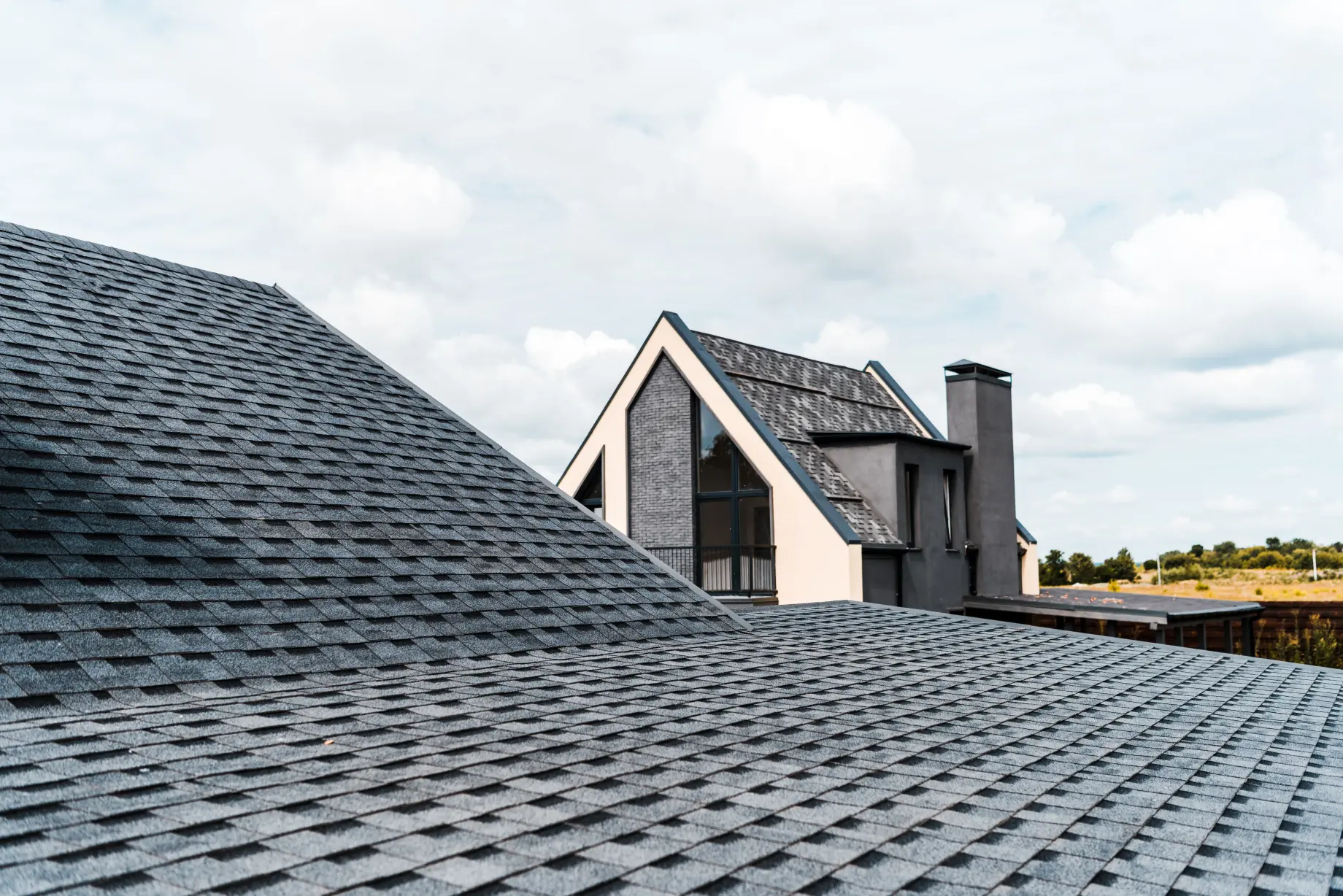
 Architectural asphalt
 Standing seam metal
The call: So when does each make sense? Asphalt shingles are the practical choice for a homeowner focused on the lowest upfront cost, a shorter expected time in the house, or matching the look of a street where laminated shingles are the norm. Metal earns its premium for owners planning to stay 20 years or more, homes on the steeper snowbelt slopes where shedding is a real advantage, and anyone who wants to replace the roof once and stop thinking about it. Roof pitch, existing structure, and budget usually settle the question before aesthetics do.
Snow shedding, street by street
Snow shedding is where Buffalo's climate tips the scale. Metal's smooth, hard surface encourages snow to slide rather than pile, which reduces the standing snow load and the freeze-thaw cycle that drives ice dams. That advantage matters most in the snowbelt south of the city rather than at the airport. During the November 2022 lake-effect storm, the National Weather Service recorded about 82 inches at Orchard Park while the Buffalo airport measured only 36 inches, a gap that shows how uneven snow load can be within a few miles. Asphalt shingles hold snow longer, which is not automatically bad, but it puts more emphasis on attic ventilation, insulation, and ice-and-water shield at the eaves. When a metal roof sheds onto a walkway, doorway, or driveway, snow guards are added to control the release.
“Several metal roofing styles encourage snow shed and minimize ice damming due to their smooth surface.”
Wind, hail, and how the two age
Beyond snow, both materials must survive Western New York's wind, freeze-thaw swings, and the occasional summer hail. Metal panels are non-combustible and shrug off wind uplift and impact better than most shingles, and they do not curl, crack, or lose granules the way asphalt does as it ages. Asphalt has improved substantially, though. Architectural shingles carry strong wind ratings and Class A fire ratings, and quality lines from CertainTeed and Owens Corning are engineered for freeze-thaw durability. The practical difference is how the two age. Metal holds its performance nearly flat for decades, while asphalt degrades gradually and predictably, which is why the 22 to 25 year figure is an expectation, not a guarantee, when ventilation or ice damming is neglected.
The noise myth
Noise is the concern homeowners raise most about metal, and it is largely a myth for modern systems. A metal roof installed over solid decking with a synthetic underlayment is only marginally louder in heavy rain than asphalt, because the panels are not drumming over open framing the way a bare barn roof does. Asphalt shingles are slightly quieter by nature, so noise-sensitive owners sometimes lean that way, but it should rarely be the deciding factor once proper decking and underlayment are in place.
What resale gives back
Resale value favors both, with a caveat. According to the Remodeling Cost vs. Value Report, a new asphalt shingle roof recoups roughly 60 percent of its cost at resale, one of the more reliable exterior returns a homeowner can make. Metal recoups a smaller share of its higher price at sale, so the metal premium is best justified by the years you plan to stay in the home rather than by an immediate appraisal bump. Buyers in Western New York recognize a newer roof as one less thing to worry about, and a documented, warrantied installation supports that perception with either material.
The ledger
- Buffalo annual snowfall
- About 85 inches per year (National Weather Service)
- Architectural asphalt lifespan
- About 22 to 25 years (NAHB / NRCA)
- Metal roof lifespan
- 40 to 70 years (Metal Roofing Alliance)
- Cost difference
- Metal costs about 2 to 3 times more than asphalt (This Old House, NerdWallet)
- Asphalt resale recoup
- Roughly 60 percent at resale (Remodeling Cost vs. Value Report)
- Ventilation impact
- Proper attic ventilation adds up to 25 percent roof life (NRCA)
How to make the call in six steps
- 01Set your time horizon. Decide how long you plan to own the home. Under 10 years favors asphalt's lower upfront cost; 20 years or more favors metal's 40 to 70 year lifespan.
- 02Check your roof slope and snow exposure. Steeper Buffalo snowbelt slopes gain the most from metal's snow shedding. Low-slope or shaded roofs may not shed as freely, which changes the calculation.
- 03Compare true cost, not just the quote. Weigh asphalt at roughly $1.50 to $6.00 per square foot against metal at $4 to $30, then factor a likely second asphalt replacement within 20 to 25 years.
- 04Confirm ventilation and ice protection. Ask that any bid include proper attic ventilation and ice-and-water shield at the eaves; the NRCA links good ventilation to up to 25 percent more roof life.
- 05Match the material to the neighborhood and warranty. Confirm the look fits your street and the manufacturer warranty fits your plans. CertainTeed and Owens Corning asphalt and quality metal both carry strong warranties.
- 06Get a local assessment. Have a Buffalo roofer inspect the deck and structure before choosing. Call Mann Roofing and Remodeling at (716) 500-6266 for a material recommendation.
What the terms mean
- Architectural shingle
- A laminated, multi-layer asphalt shingle, also called a dimensional shingle, that mimics the look of wood shakes and typically lasts about 22 to 25 years, longer than flat 3-tab shingles. It is the most common mid-grade roofing choice on Buffalo homes.
- Standing seam
- A metal roofing system made of vertical panels joined by raised, interlocking seams that conceal the fasteners. The smooth, continuous surface sheds snow readily and can last 40 to 70 years, which makes it well suited to Buffalo's lake-effect climate.
Sources
- National Weather Service, Buffalo Monthly Snowfall
- Metal Roofing Alliance, Snow & Ice
- NerdWallet, Metal Roof vs. Asphalt Shingles: Cost, Lifespan and Installation
- This Old House, Shingles vs. Metal Roof Cost
- National Roofing Contractors Association (NRCA)
- Remodeling Cost vs. Value Report, roof ROI summary (Opendoor)
about 22 to 25 years
Architectural asphalt shingles typically last about 22 to 25 years, with basic 3-tab shingles closer to 20 and luxury shingles 30 or more.
Source: National Association of Home Builders / NRCA40 to 70 years
Metal roofs commonly last 40 to 70 years, and standing seam systems shed heavy snow well.
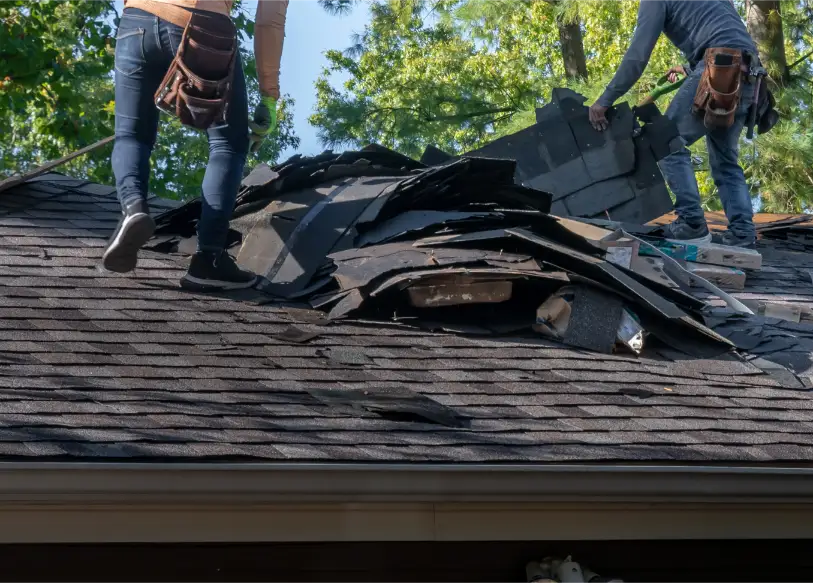
Metal Roofing AllianceReal Mann roofs, both materials, on the record


Asphalt vs metal questions
Is a metal roof worth it in Buffalo's snow?
For Buffalo homes that see heavy lake-effect snow, metal is often worth the premium. Its smooth surface sheds snow and resists ice dams, and it lasts 40 to 70 years per the Metal Roofing Alliance. Asphalt still performs well here, so the choice comes down to budget and how long you plan to stay.
How much longer does a metal roof last than asphalt shingles?
A metal roof lasts roughly twice as long. Architectural asphalt shingles typically last about 22 to 25 years per NAHB and NRCA guidance, while metal roofs last 40 to 70 years according to the Metal Roofing Alliance. Many homeowners replace an asphalt roof twice in the lifespan of one metal roof.
Are metal roofs noisy in rain and snow?
Not meaningfully. A modern metal roof installed over solid decking with synthetic underlayment is only slightly louder than asphalt in heavy rain, because the panels are not drumming over open framing. Asphalt shingles are marginally quieter, but noise rarely decides the choice once proper decking is in place.
Which is cheaper, asphalt or metal roofing?
Asphalt shingles are cheaper. Installed asphalt runs about $1.50 to $6.00 per square foot, while metal spans roughly $4 to $30 per square foot per This Old House and NerdWallet, generally two to three times more. Metal costs more upfront but is replaced far less often.
Do metal roofs prevent ice dams in Buffalo?
They reduce them. The Metal Roofing Alliance notes metal's smooth surface encourages snow shed and minimizes ice damming. No roof is fully immune in Buffalo's freeze-thaw climate, so proper attic ventilation, insulation, and ice-and-water shield at the eaves still matter with either material.
Get a straight answer on your material
Whichever material you choose, the details around it decide how long it actually lasts. The National Roofing Contractors Association reports that proper attic ventilation can extend roof life by up to 25 percent, and that local climate alone can change a roof's lifespan by as much as 40 percent, which is exactly why a Buffalo installation should not be treated like one in a milder region. Mann Roofing and Remodeling has served the Buffalo area since 2007 and installs CertainTeed and Owens Corning certified systems, with HEARTH financing available at 0% interest for 12 months with no payments for qualified homeowners. For a straight answer on which material fits your home, roof, and budget, call (716) 500-6266.